








Pre-Roll Cost of Goods Sold & COGS-Based Pre-Roll Pricing
Posted by Custom Cones USA on Aug 6th 2026
In an industry full of tight margins and evolving tastes, one thing is for sure: he pre-roll is a must-have driver of sales for any major brand.
Pre-Rolls in 2025 became the top-selling product in the industry by units sold, moving more than 383 million units, generating $3.6 billion in revenue and grabbing a 15.9% market share, continuing five consecutive years of growth for the category.
But launching a successful pre-roll brand is a complicated subject matter, and even after you learn to produce high-quality pre-rolls at scale, there remains a key question for producers and manufacturers: How do you price your pre-rolls so that you grow your customer base while not leaving money on the table or bleeding margin?
Because growth alone can't protect margins. And because pre-rolls are one of the most heavily discounted categories at retail, with high volume, high visibility and constant downward price pressure, pre-rolls are one of the easiest products in a cannabis brand's catalog to accidentally sell at a loss.
The key is building your price from the ground up using a Cost of Goods Sold (COGS) approach: total up every real cost that goes into a finished, sellable pre-roll, then apply a deliberate margin on top.
But how do you price your pre-rolls based on COGS? And what does the data show about pre-roll pricing?
The Pre-Roll Experts are here to help.
What is COGS and How Does COGS Apply to Pre-Rolls?
Cost of Goods Sold, or COGS, is one of the most important numbers to track in any business, but it is particularly important in the cannabis industry because of federal taxes.
At its simplest, Cost of Goods Sold represents the direct costs incurred to produce any given product. It includes raw materials, components, labor costs during manufacturing, manufacturing overhead, packaging and even shipping costs to receive the materials used. It does NOT include indirect expenses like marketing or research and development or office rent or shipping the products TO customers.
The basic formula looks like this:
COGS = Beginning Inventory + Purchases (or Manufacturing Costs) − Ending Inventory
Let's use some big, round numbers for an example:
- Beginning inventory: $100,000
- New inventory purchased: $250,000
- Ending inventory: $80,000
- COGS = $100,000 + $250,000 − $80,000
- COGS = $270,000
That means the company sold $270,000 worth of inventory during the period.
If a more direct sense, if you sold a wagon for $200 and it cost you $150 in materials and labor to create it, your COGS is $150.
So What Does COGS Look Like for Pre-Rolls
When making pre-rolls, your COGS could include:
- Flower
- Pre-rolled cones
- Filter tips
- Packaging
- Printing and labeling
- Manufacturing labor
- Ocean freight and import duties
- Warehouse handling before inventory is sold
At the same time, COGS for pre-rolls would NOT include:
- Trade show expenses
- SEO and advertising
- Sales team salaries
- Brand marketing
- Product photography
- Website maintenance
- Office staff
- Executive salaries
So Why Does COGS Matter?
Not only will knowing exactly what a pre-roll costs you to make help you better price your pre-rolls, COGS has a direct impact on revenues and tax rates.
Because COGS directly impacts your gross profit, even small reductions – like better supplier pricing, manufacturing efficiency or reduced waste – gets reflected in your bottom line.
Additionally, because of IRS Section 280E, which prevents businesses from deducting ordinary business expenses because of lingering federal illegality (this will change if cannabis gets rescheduled, as the current administration promised, but I am not sure I believe what they say), COGS are the only thing you can deduct from revenue before you calculate your taxable income.
Now, let's get into using COGS to price our pre-rolls.

Using COGS for Pre-Roll Pricing
Every pre-roll you make can be broken down into about six cost buckets, plus a few considerations, that you need to make sure you understand and have under control to correctly price your pre-rolls.
And unsurprisingly, it starts with your flower.
1 - Flower
This is the cannabis industry, of course, so flower is going to be your single input cost, often representing 30–50% of total COGS for a standard pre-roll. However, it is also one of the least stable numbers in the formula.
Your cost per gram depends on whether you're using top-shelf flower, small buds, trim, shake or a blend, all of which depends on your brand's messaging and will affect your price point. Each input has a different cost per gram, and the ratio matters. It also depends on whether your company grows its flower or is purchasing wholesale.
Calculate this number as a true cost per gram at your production facility, not the sticker price per pound. Freight costs, any processing loss and moisture loss between purchase and use all belong here.
Here's how to calculate it: Determine the percentage of each input type in your blend, multiply each by the cost per gram of that input source, and add up those results.
Let's take a look at a few example using the Leaflink 2026 Wholesale Cannabis Pricing Guide national numbers. Your numbers will obviously vary depending on your market and your inputs. Also, these are wholesale numbers, so if you are growing your flower, your costs will vary.
According to Leaflink, in 2025, bulk flower costs, on average, $998 per pound, or $2.20 per gram; trim costs $940 per pound, or $2.07 per gram; and shake costs $961 per pound, or $2.12 per gram. It's also worth noting that, generally, smaller "B Buds" will run cheaper in wholesale purchases than "A Buds," (which will likely get packaged as buds, not ground for pre-rolls anyway), but there are no real sources available that distinguish between prices for the two.
For example's sake, let's just use 50% flower, 25% shake and 5% trim in each pre-roll. It will make this math easier, but again, for your own COGS analysis, be sure to sub in your local prices for whatever inputs you use for your pre-rolls.
For a 109mm 1g pre-roll, that's $2.15 in flower cost. For an 84mm half gram pre-roll, it's about $1.08.
Flower Cost Per Pre-Roll
| Input Type | % of Blend | Cost/gram | Weighted Cost/ 1-gram pre-roll |
|---|---|---|---|
| Flower | 50% | $2.20 | $1.10 |
| Trim | 25% | $2.07 | $0.52 |
| Shake | 25% | $2.12 | $0.53 |
| Total | 100% | - | $2.15/1-gram pre-roll |
And again, those are national average numbers. For example, Michigan publishes a price guidance chart for the industry every quarter and lists its prices for Q3 of 2026 as $641 per pound for flower and about $350 per pound for shake/trim, considerably less than the national average.
Additionally, a 2025 report from Cannabis Benchmarks showed that trim prices average about 15% of flower prices national (with variance ranging from 3% of flower prices in California to 34% of flower prices in Alaska), so just plug your local market's numbers into the formula to make it work for your business.
Also, if you are making infused pre-rolls, this is where you also need to factor in the cost of creating the concentrate that goes into your pre-rolls. For our purposes though, let's just stick with flower pre-rolls to keep it simpler.
2 - Pre-Rolled Cones
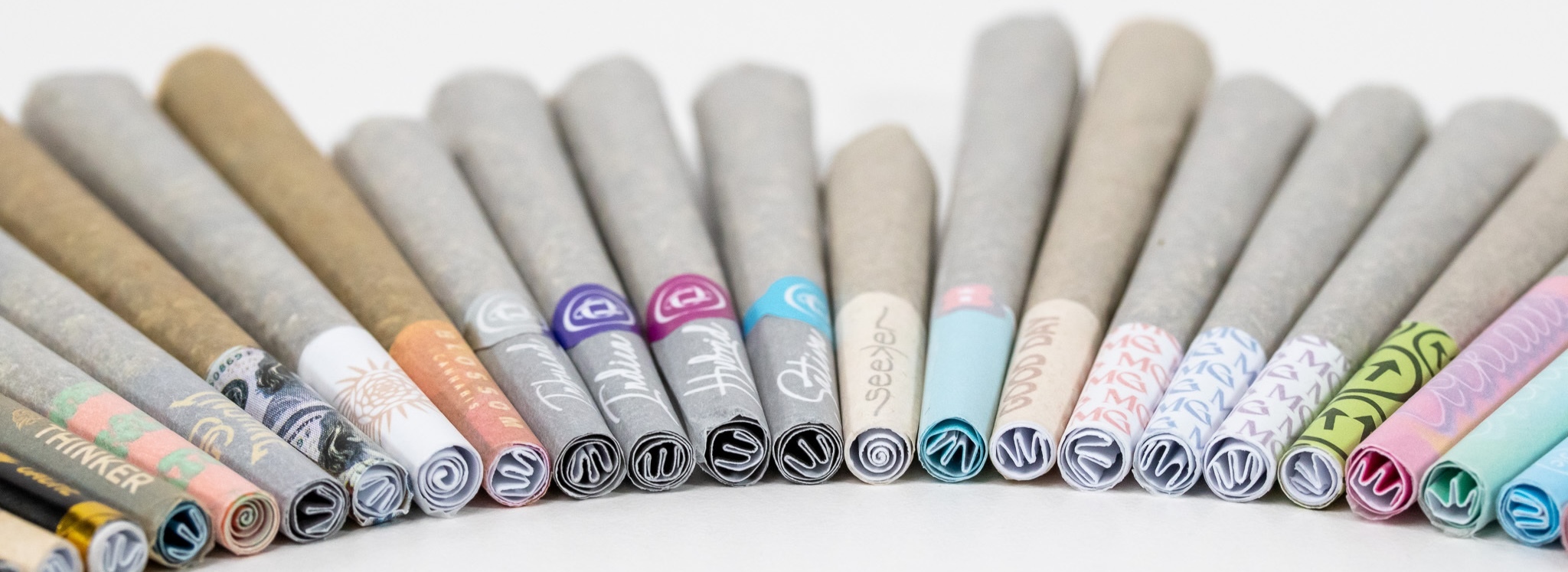
After flower, the key component to making pre-rolls is the pre-rolled cone. Your cost per cone should factor directly into your pricing.
Pre-rolled cones come in a variety of sizes and paper types that you can cater to your business. In fact, packing multiple sizes and paper types often makes sense depending on the flower, the brand and the consumers they are hoping to reach.
Pre-Rolled Cone Costs Per Unit
| Cone Type | Cost Per Unit (at volume) |
|---|---|
| Standard paper; refined white, natural brown | ~ $0.06 |
| Hemp or specialty paper | ~ $0.07 |
| Custom-branded cones | ~ $0.11 |
| Hemp wrap | ~ $0.08 |
*Typical costs for high-quality pre-rolled cones (per 100,000 cones) used
Costs vary, of course, depending on the quality of paper, shipping and order size. For example, on a large enough order, custom-branded cones become as cheap as unbranded ones.
Your pre-rolled cones, it should be noted, can also affect costs further down the chain.
For example, cheap, poorly made cones are more prone to tearing or folding, which can affect your costs in the form of re-work. Other cones might also not burn well or have crooked gum lines that can cause canoeing, which can affect your bottom line by turning away customers.
Or, if your pre-rolled cones are not tested to the same quality standards as your flower, your completed pre-rolls may not pass required lab testing, requiring entire batches to be destroyed, or could be recalled. Worse yet, untested paper might make someone sick and that is never good for the long-term health of any brand.
Investing in consistent, well-manufactured and tested pre-rolled cones from a trusted source can often reduce total COGS by cutting waste and increasing throughput, even if per-unit costs may initially seem slightly higher.
3 - Packaging
With the flower secured and the pre-rolled cone packed, the next step in our COGS-inspired pricing is the packaging, because you can't just send that pre-roll to market as is.
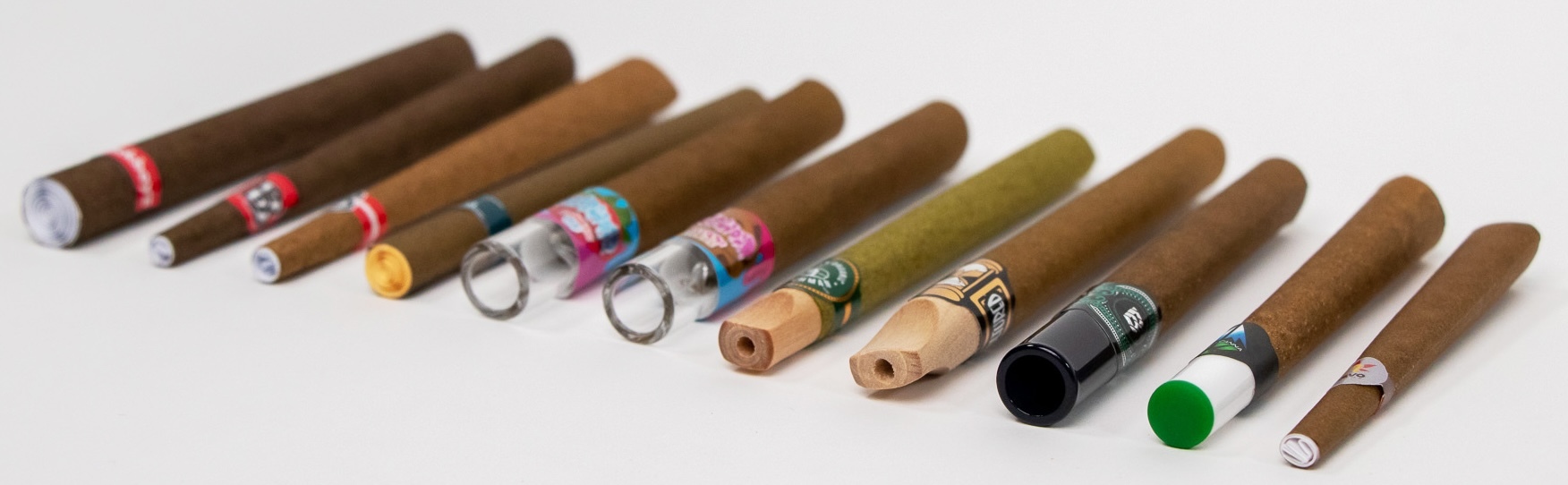
Your packaging does not just include the tube or box either. Pre-roll packaging needs to include the tube, inserts for multi-packs, label – or custom label – and tamper bands or shrink sleeves, if required.
Your choice of packaging also affects your costs, of course. Plastic pop-top doob tubes are cheaper than screw-top plastic, which are still cheaper than glass, for example. Let's take a look at some standard prices.
Packaging Costs Per Unit
| Packaging Component | Cost |
|---|---|
| Doob tube (pop-top, CR) | $0.06 |
| PET plastic tube | $0.12 |
| Custom Label | $0.11 |
| Multi-pack push pack (5-pack) | $1.15 |
| Tamper band | $0.02 |
*Typical per-unit packaging costs
Packaging options and combinations are almost endless. For example, you can custom direct-print onto, say a tin, at a cost of about $1.30 per unit. But the key here is to make sure your packaging corresponds to your sales tier.
If you are selling cheaper pre-rolls, then wasting your money on expensive packaging will be eating into your margins. But a high-end pre-roll often needs a high-end package to get consumer attention or to spend the extra money, so make sure you match your packaging to your product positioning and marketing.
And of course, your packaging decisions can also affect your labor. For example, having labels applied before your tubes are shipped can save manpower at your facility. Even more important when it comes to throughput is to make sure your supplier sends your tubes opened and ready to be loaded, so your employees do not have to waste any of their time on that basic step.

4 - Labor
OK, this is a big one, and we've already touched upon how other choices can affect this. But this is the line many brands underestimate.
Labor cost per unit depends heavily on your production method:
- Hand-packed: Highest labor cost per unit, but can allow for hand-selected bud placement and premium positioning;
- Semi-automated (cone-filling machines, manual assisted closers): Meaningfully lower labor per unit than hand-rolling, but still requires trained staff for quality control, weighing, and inspection; or
- Fully automated fill-and-close lines: Lowest per-unit labor cost at scale, but carries large upfront capital cost that needs to be factored into overhead. Not recommended for all but the largest producers.
Whatever your pre-roll packing method, calculate labor like this:
- First, track the total labor hours spent on pre-roll production in a defined period (include filling, packing, QC and packaging).
- Second, multiply by the fully burdened labor rate, including wages, benefits and payroll taxes.
- And lastly, divide that number by the total pre-rolls produced in the period.
Let's plug some numbers in as an example:
- 3 production staff × 8 hours/day × 22 days/month = 528 labor hours
- Burdened rate: $22/hour
- Monthly labor cost: $11,616
- Monthly output: 30,000 pre-rolls
- Labor cost per unit: $0.39
Obviously, use your numbers here instead of our big, round numbers, but this is the basic idea.
Again here, you can see, labor costs are among the highest of your cost of goods sold calculations, which is why it is important to prevent re-work due to cheap cones or ineffective machines or to not waste employee time opening packaging before having to fill with pre-rolls.

5 - Testing
No pre-roll is complete and ready for market without going through testing, whether just the flower itself or, as many states require, the final form of the product, including the paper and filter tip.
Every batch must be tested for potency as well as a state-mandated panel of tests for pesticides, heavy metals, residual solvents and microbial contaminants before it can be sold.
The cost of testing varies by state and laboratory, of course. One peer-reviewed cost study (from 2020) estimated compliance testing added roughly $136 in cost per pound of dried flower in California. Importantly, that study also found that product destroyed due to failing testing was the largest driver of total testing cost, not the lab fee itself.
Generally though, a full lab screening of cannabis in 2026 with all the necessary tests should run around $300-600 per batch, depending on where you are located and what tests are required.
To factor testing in as part of your pre-roll COGS pricing, add up all testing costs for a batch and divide by the number of units in that batch. Again, let's use some big, round numbers to make it easy.
Example:
- Full compliance panel: $600
- Divided by batch size: 5,000 units
- Testing cost per unit: $0.12
Again, batch size matters here. Efficient operators producing large batch sizes can keep testing lower than smaller operators running smaller batches, something that could be worth addressing through batch size optimization to save money.
6 - Facility and Equipment Overhead
This can get a little tricky.
For COGS purposes, the rent of your production facility and production utilities can count toward rent, however, general office rent, administrative costs and non-production utilities cannot be included, for tax purposes, anyway.
For your pricing purposes, however, you can include whatever you feel is necessary.
The simplest approach is to calculate a monthly overhead total and divide it across your monthly production volume to get an overhead-per-unit figure, then add that to your direct COGS.
Putting it Together
So those are all the factors, now we just take the numbers and add it all up:
- Flower/concentrate cost per unit
- Cone or rolling paper cost per unit
- Packaging cost per unit
- Labor cost per unit
- Testing cost per unit (batch cost ÷ sellable units in batch)
- Overhead allocation per unit
So let's plug in our numbers from above (which, again, are just for example purposes) and see what we get. I'm going to leave out the final bucket, however, because this will vary too greatly but be sure to add in your business's calculations.
Per-Unit COGS Example: 1-Gram Pre-Roll
| Cost Component | Per-Unit Cost |
|---|---|
| Flower | $2.15 |
| Standard Cone | $0.06 |
| Plastic Doob Tube | $0.06 |
| Custom Label | $0.11 |
| Tamper Band | $0.02 |
| Labor | $0.39 |
| Testing | $0.12 |
| Total COGS | $2.91 |
Margins
Once your COGS price is in place, the final variable is margin, which is your profit. A good, round margin to shoot for is 40%.
That brings our pre-roll to a total (wholesale) price of $4.07.
Which is very close to the national average cost of pre-rolls, equalized to a gram. According to our 2026 State of the Pre-Roll Market Report, the average pre-roll carried a wholesale average price (equalized to a gram) of $3.23.
Now, a dispensary will add their mark-up to this product as well, making the final price higher, of course. In the pre-roll category, the retail profit margin was an average of 46.6% bringing the average, per-gram equalized price of a 1-gram pre-roll to $5.95 at a dispensary.
Controlling COGS
Once you understand what your costs are, you can begin to control them a little better and adjust your prices and margins accordingly.
Here are a few tips for optimizing your COGS for pre-roll pricing.
Optimize Your Flower Blend
This is the single largest COGS lever for most producers. Unless it is explicitly part of your marketing, experiment with your blend ratios. Many consumers can't distinguish a 70/30 trim-to-small-bud blend from a 50/50 blend in a pre-roll format, especially when properly ground, sifted and packed.
If you're growing your own, track the true cost of your trim and shake as a byproduct, not at whole-flower prices.
Right-Size Your Cones and Packaging
Audit whether your cone and packaging specs match your product's market position. A $5 pre-roll in a custom-printed artisan tube is not going to meet margin. At the same time, a $12 infused joint in a generic doob tube may be leaving money on the table.
Also, remember that re-work from fixing faulty cones or failing a lab test can add to your labor costs and decrease your margins, so don't just look at per-cone cost. Do the math.
Then choose a supplier that meets your needs. A one-stop-shop like Custom Cones USA, which tests every product to the highest quality standards in the industry, can help save shipping costs by bundling all of your needs or orders together.
Invest in Automation Where the Math Supports It
Calculate your current labor cost per unit. If it's above $0.40, model the payback period on a filling machine upgrade. Many operations recoup the investment within 6–12 months through reduced labor cost and higher throughput, which also improves your testing cost allocation by enabling larger batch sizes.
Even something simple like adding a cone-loader or closing device to your current cone-filling machine can save valuable employee time and labor on each cone, lowering COGS and boosting margins.
Common Mistakes to Avoid
Make sure your overall price is competitive in your market. But deciding price based on your competitors can cost you money. Competitor pricing tells you what the market will bear, not what you can profitably charge. Use it as a ceiling check, not a starting point.
Remember to re-run your math when flower cost shifts, which it will as your market matures and throughout the year. Biomass cost is your most volatile input and a pricing model that you never revisit will be out of date soon enough.
Next up, ignoring batch failure risk in testing costs. As noted above, destroyed product from a failed batch is usually a larger cost than the lab invoice. Ask your supplier to provide COAs to prove that they will never be the reason you fail a lab test.
Don't average labor costs across product lines. A hand-rolled infused pre-roll and a machine-filled flower-only pre-roll do not share a labor cost. Model them separately.
The Bottom Line on Your Bottom Line
Pricing pre-rolls from a COGS foundation not only helps provide a smart jumping off point for your prices, but helps you better understand exactly what goes into making your pre-rolls.
When you know your true cost per unit, you can set wholesale prices that protect margin, model promotional discounts without guessing, identify which SKUs deserve more shelf space and make sourcing decisions (flower, cones, packaging) based on what actually moves the needle on profitability.
Use this as a guide, but remember to plug in YOUR numbers. Every market and every brand are different.
Do the math. The results may surprise you, and that's exactly why this matters.
Contact the Pre-Roll Experts today to find the right combination of pre-rolled cones, machines and packaging that lowers your COGS and sets up your brand for success.
Cost of Goods Sold, or COGS, is an important number to track in any business, representing the direct costs incurred to produce any given product.