



How to Kief Coat Pre-Rolls
Posted by Custom Cones USA on Aug 25th 2026
There's no hotter category in cannabis than pre-rolls, and there's no hotter segment of the pre-roll category than infused pre-rolls, which accounted for 47% of all pre-roll revenue in 2025.
It's no surprise that infused pre-rolls are so popular. By combining a concentrate with flower, manufacturers can increase potency and flavor, all while maintaining the lower price point and portability that has made pre-rolls the top category in the industry by unit sales.
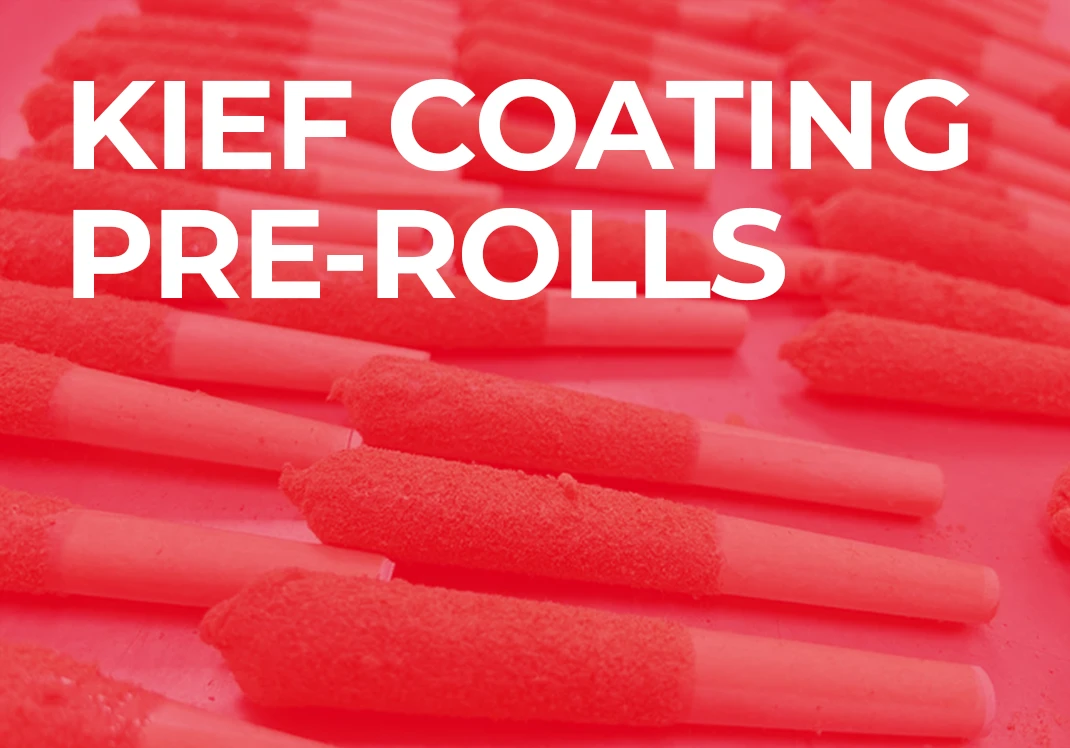
And while there are several different ways to infuse your pre-rolls, including internal mixing, hash holes and others, external kief-coating not only adds the potency and flavor that infused pre-roll smokers are looking for, but creates the most striking visual, which is why it's used by top pre-roll brands like Jeeter and STIIIZY.
So how do you coat pre-rolls in kief? And what's the best way to make kief-coated pre-rolls at scale?
The Pre-Roll Experts have the answers.
Getting Started with Kief Coated Pre-Rolls
Coating your pre-rolls in kief may not seem like that complicated a process, but in order to compete with the top brands in the country, like Jeeter, and to get top dollar for your pre-rolls, it's important to do it right.
And while this is a straightforward process, it does require some prep work.
First, pack your pre-rolls as you normally do. You can't make a high-quality kief-coated pre-roll unless you can make a regular high-quality pre-roll. Once your pre-roll is closed and ready for packaging, then we can begin coating the outside with kief.
To apply kief to the outside of a pre-roll, you will need something to make it stick to the pre-roll's cone. There are a few trains of thought here: you can either use a cannabis concentrate, further boosting your potency and flavor – as well as your cost per unit – or you can use some sort of food grade adhesive.
You will also need to gather your kief and place it in a large tray or plate, big enough to easily roll or shake your pre-rolls in.
Pre-Roll Expert Tip
It may sound obvious, but make sure the kief you are using is actually kief. Kief is the collection of trichomes that have been sifted off cannabis flower, not the flower itself. It typically has an amber color. Ground flower is not the same thing, though it is sometimes sold as kief. But budtenders and customers will be able to see and taste the difference.
The addition of a finer mesh kief screen to your sifting process, key to any high-quality pre-roll, is an easy way to collect kief. Look for a higher screen size number since when it comes to screens, the higher number means a smaller particle size, so start with an 80 or 100 mesh size and adjust accordingly.
Using a Concentrate to Kief Coat Pre-Rolls
Cannabis concentrates are a great choice for kief-coating your pre-rolls, but before a concentrate can be applied to the outside of a joint, you're going to have to reduce its viscosity. In other words, something needs to be done to make the oil thinner so it can be better manipulated.
There are a few different ways to accomplish this. Botanical or artificially derived terpenes can be added to help thin out the oil, as well as add some flavor. Also, like the oil in vape carts, a cutting agent can be added to thin the oil out.
The temperature of the oil also impacts its viscosity. As the oil is heated, it becomes more fluid. The issue here is that heat will also degrade cannabis, so be careful to ensure that the oil is only heated as much as needed and for as short of a time as possible.
The terpenes present in cannabis and concentrates are called volatile organic compounds, and the "volatile" refers to how sensitive they are in terms of evaporating very easily. With too much heat, you will destroy the terps left in your concentrate. Heat can also degrade cannabinoids, reducing your potency numbers.
Distillate for Kief-Coated Pre-Rolls
The main go-to for manufacturers looking to create kief-coated pre-rolls is distillate.
The reason that distillate is the most common oil used to create infused pre-rolls is because of its high potency, and the way it is produced. Whereas other types of cannabis oils are prized for their terpene and cannabinoid profiles (any type of heat being avoided), distillate is created by using heat specifically to isolate THC.
In other words, you do not have to worry about maintaining the chemical complexity of the oil through production. Distillate is also the cheapest and most widely available type of cannabis oil.
Because of its lack of chemical diversity, distillate is often considered a low-quality concentrate; however, its ability to drastically increase potency and its ease of use makes it ideal for easily infusing joints. Plus, you can always add terpenes and flavors to the oil, so distillate just makes a lot of sense.
A vacuum oven is key to bringing the oil up to an appropriate temperature without degrading it. Once out of the oven, place your oil on a heating plate or candle warmer to keep it from thickening back up and ensure that the oil stays easy to use throughout the production process.
Once heated, simply paint the outside of your pre-roll with cannabis oil using a food-grade brush. Once the oil has been applied, either roll the oil-covered preroll in kief or place it on the tray or plate and gently shake the tray back and forth to fully coat the pre-roll.
You can coat multiple pre-rolls at once with kief, but don't let your oil-coated pre-rolls sit too long before shaking the tray or else the oil can dry.
It's also wise to work on non-stick surfaces, like a silicone mat or parchment paper, to keep your application tools from sticking to everything they touch.
Using Other Adhesives to Make Kief-Coated Pre-Rolls
Not every company that makes a kief-coated pre-roll uses a concentrate as their adhesive to make the kief stick to the joint or blunt. And not every pre-roll consumer is looking for the extra punch on potency that a cannabis oil or distillate can add.
There is also a cost component to consider, both on your end as the manufacturer and the additional cost to consumers once that product hits shelves.
For companies – and consumers – not wanting to use a cannabis concentrate to coat their infused pre-rolls, there are several other options, such as pre-mixed glues or gum arabic. Gum arabic is an inexpensive natural substance harvested from wild trees that is made up mostly of two different sugars that are used throughout the food industry, among others, because it works like a glue but is completely edible.
Like cannabis oil, the adhesives will have to be heated before use to allow them to be painted on the outside of your joints before kief coating, but once it gets to temp, the process is exactly the same as before: paint the outside of your filled pre-rolls with your adhesive and then roll or shake them in a tray of kief until fully coated.
How to Kief Coat Pre-Rolls at Scale
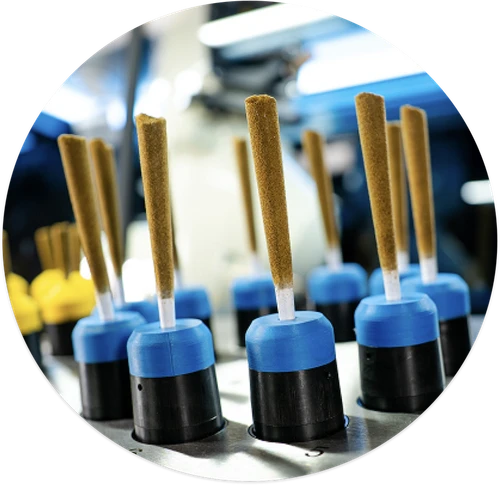
For manufacturers looking to create kief coated pre-rolls in large quantities, the KiefLabs KL120 Automated Joint Coating Machine is the right pre-roll machine for the job, designed to increase throughput while cutting down on employee hours and frustration.
Designed specifically for making kief-coated pre-rolls, the KL120 contains two stainless steel roller housings and reservoirs, each with its own temperature control system and a pair of rollers that allows each side of the machine to coat two pre-rolls at a time with a precision and repeatability that is difficult to match by hand.
Though it works with distillate as well as pre-mixed glues, we have found the KL120 works best with Acacia, purchased in powder form and mixed with water to preference (we found a mix of about 17-20% Acacia works best).
But be warned: many pre-made glues contain a binding agent to keep them stable. Those agents thicken the glue and cause it to flow to one side, making it difficult to coat pre-rolls evenly.
Once you have made your mix, simply fill each reservoir with the adhesive of your choice, set the temperature and wait for it to heat up. For glue, we recommend a temperature around 30 degrees Celsius or 85 degrees Fahrenheit, and while warm, it is still safe to the touch. When using distillate, your reservoir should be pre-heated to about 80-100 degrees Celsius, which is between 175 and 200 degrees Fahrenheit, requiring a little more care so your employees do not accidentally touch the metal.
After letting your adhesive come up to temperature, employees simply place filled and closed pre-rolls – up to 120mm in length or 20mm in diameter – on the roller with the filter resting on one of the adjustable crutch holders and let it rotate about three times, or about 2 seconds, coating the outside with your adhesive.
Each reservoir can coat 2 pre-rolls at once for a full-use, hour-long total of around 4,500 - 7,000 coated pre-rolls.
Once coated, place the pre-rolls on your kief tray and immediately dust the coated pre-roll directly with your kief to finish the process.
Final Thoughts on Coating Your Pre-Rolls with Kief
With infused pre-rolls surging to the top of best-selling lists across the country, it makes sense that every pre-roll manufacturer include an infused pre-roll among their regular line, if possible.
And though there are multiple ways to infuse pre-rolls, few are as eye-catching or recognizable as kief-coated pre-rolls, which are not as difficult to create as some might think.
It all comes down to the right adhesive at the right temperature. So whether you are coating pre-rolls with kief by hand or using a pre-roll machine to create kief-coated pre-rolls, keep your eyes on your temperatures and you'll be making high-quality kief-coated pre-rolls in no time.
And as always, the Pre-Roll Experts are always here to help, so contact us today to find out how best to improve or scale your kief-coated pre-roll line.
To apply kief to the outside of a pre-roll, you will need something to make it stick to the pre-roll's cone.